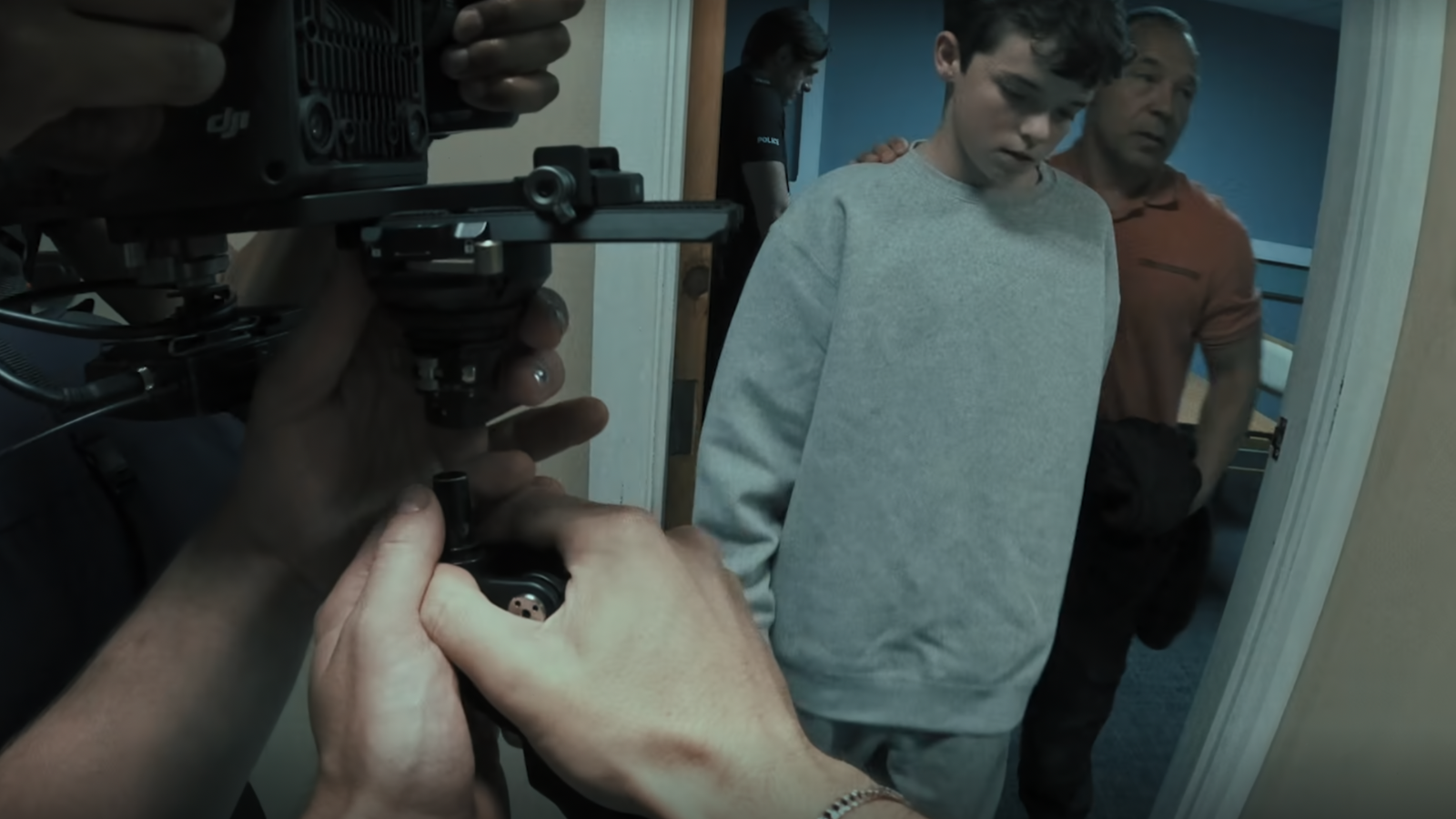
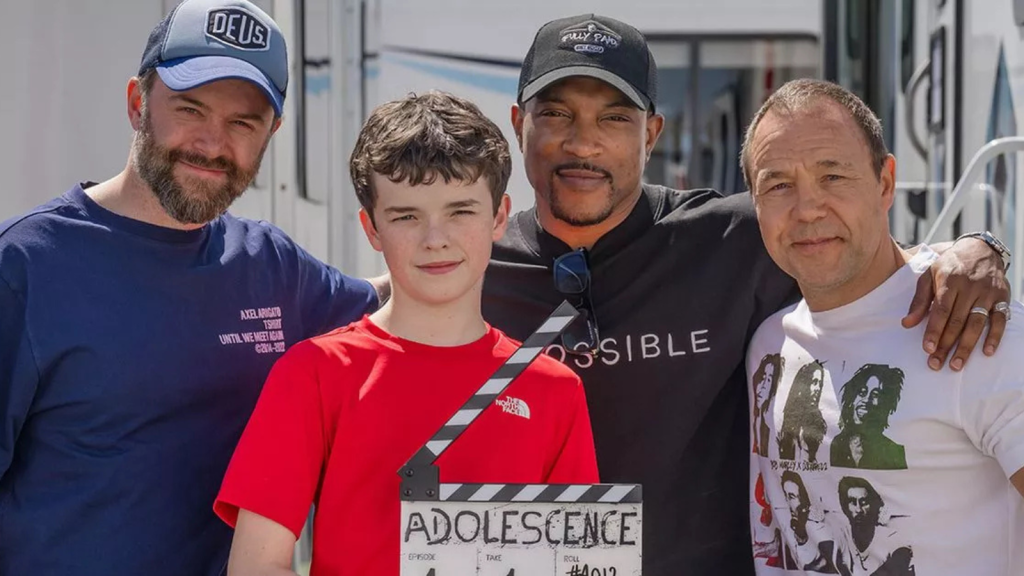
This week on The Filmmakers Podcast, host Dom Lenoir was joined by the cast and crew behind the series Adolescence. Erin Doherty, Stephen Graham, Philip Barantini, and Jack Thorne chatted about the process of creating this powerful one-shot drama and how they explored themes of societal violence, family dynamics, and complex human behaviour.
Where it All Began
The idea for Adolescence originated after Stephen and Philip were struck by two news stories, that happened within a few months of each other. Both stories involved a young child stabbing another young child to death. And the stories ‘rocked (Stephen) to (his) core.’
Philip shared, “We were driving and discussing these tragic incidents, asking, ‘Why is this happening? What’s going on in society?’” It was the conversation and their mutual concern about knife crimes, particularly in younger generations that sparked the idea to explore the social and psychological factors that contribute to this behaviour happening.
As Philip put it, “we wanted to understand the why behind the violence—why kids are picking up knives and how that decision is shaped by their environment.”
Involving the Right Cast and Crew
Adolescence is striking due to the unflinching portrayal of Jamie, played by Owen Cooper, who is coming to confronted with this act of violence. The story takes an unconventional approach by focusing not just on the crime, but on the broader effects it has on the family and society.
As Stephen explains, “The idea was to flip the conventional narrative and look at the deeper issues that lead to this kind of violence—without resorting to clichés.”
The cast and crew worked relentlessly to bring this vision to life.
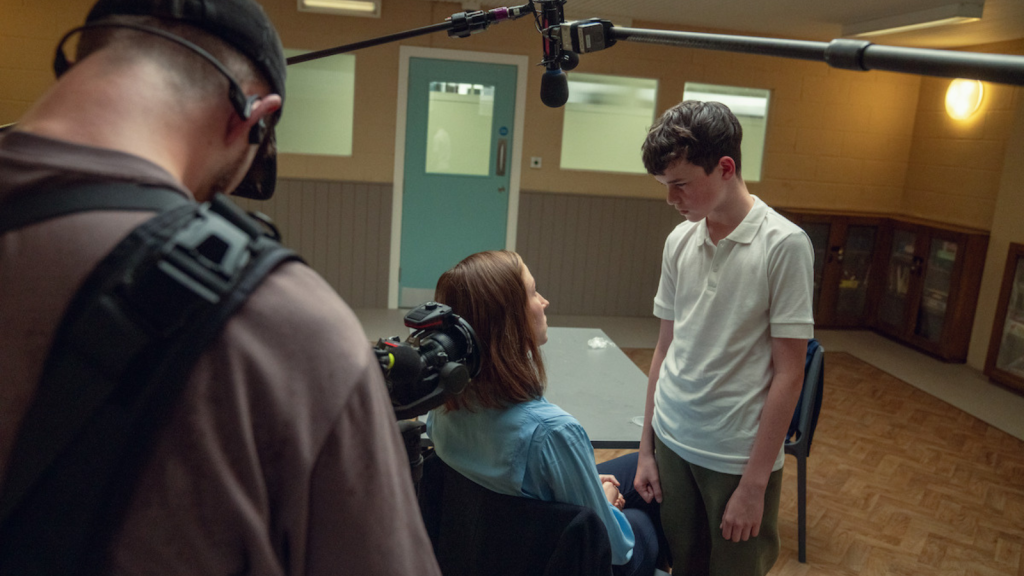
Erin, who portrays the child psychologist, described the preparation as both challenging and rewarding. “I wanted to bring as many layers as possible to my character, avoiding the usual clichés of a psychologist asking questions,” Erin says. She credits Jack Thorne’s writing and her fellow actors, particularly Owen, for helping her bring depth to the role. “Owen’s authenticity and decision-making were phenomenal,” she adds. “We were holding each other up throughout.”
We are made conscious of the collaborative spirit of Adolescence throughout the discussions, with the cast and crew frequently praising each other’s contributions. Stephen reflected on the importance of working with talented, like-minded individuals: “It’s all about working with wonderful people who understand the craft. Phil, Shaheen, the entire team—they elevated this project and brought out the best in us.”
The One Shot Series
Philip Barantini, known for his one-shot feature Boiling Point, directed. Phil discussed the challenge of rehearsing long, complex scenes without cuts. “We rehearsed longer than we shot,” he shared. “It was like choreography—every person had to step up, and if one person didn’t, things would fall apart. But the atmosphere on set was incredibly positive. It was about leaning in and trusting each other.”
Adolescence, like Boiling Point, is shot in a single take. This ambitious choice was made with the aim of capturing the raw, unbroken tension of the narrative. According to Jack Thorne, who co-wrote the series, the decision to go with a one-shot format was about more than just technical brilliance. “It had to serve the story. If it’s just about doing a cool thing with the camera, you lose the emotional impact,” he says. The use of a single take adds a layer of urgency, forcing the audience to stay fully immersed in the characters’ emotional journeys.
The technical side of the production was no less demanding. Jack and Phil shared the logistics of managing a single take, especially when it came to maintaining the flow of the narrative. Phil explains that “it’s about understanding how the space works—how to manage transitions without disrupting the tension. You can’t just whip the camera around for dramatic effect; it has to feel natural, like the audience is right there with you.”

Reflecting Society on the Screen
From the initial concept, sparked by what was happening in society to the painstaking work of crafting an emotionally resonant, one-shot drama, the series is a testament to the power of collaboration and storytelling. As Phil put it, “what started as a little idea has now become something we’re all incredibly proud of.”
With its exploration of societal violence, its alternative format, and unforgettable performances, Adolescence is a series that will leave a lasting impact on its viewers.
You can listen to the full episode here.