
The Filmmakers Podcast host Giles Alderson chatted with Stephen Follows and Jennifer Handorf about The Horror Report – Stephen’s comprehensive analysis of the horror genre.
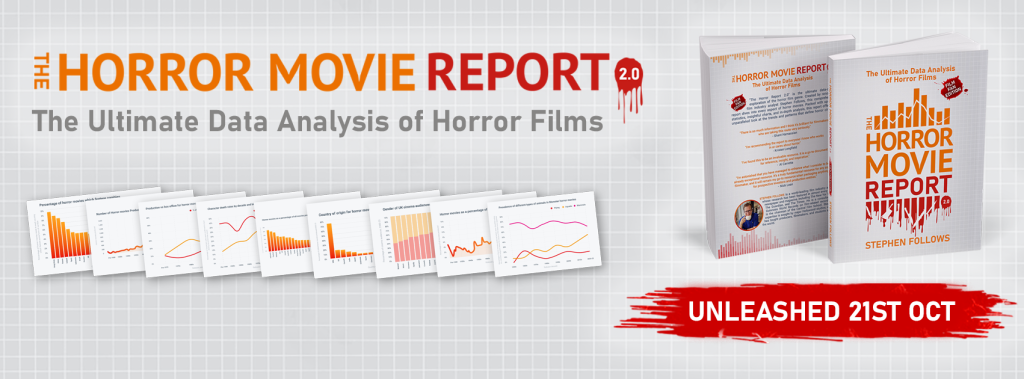
The Horror Report
Stephen explained that his focus with the report was to provide valuable insights into production, profitability, and data-backed strategies. And while there is a “film fan” version with charts and cool graphics, The Horror Report has been crafted as a professional tool for filmmakers.
“There’s stuff about profitability, budgets, all the data in Excel spreadsheets, a couple of bonus reports around film festivals and how to write a business plan for a horror film,” Stephen said, making it clear that his goal is to support filmmakers with factual data.
Horror Filmmaking
One surprising insight was the sheer volume of horror films being produced.
The genre has seen an increase over the years, from around 150 horror films per year in the 1980s to over 1500 in recent years. Stephen shares that this is due to technological advancements which have made filmmaking more accessible. “Filmmaking is easy now. Most people have access to a smartphone,” he noted, highlighting that the boom is happening across all genres but is particularly pronounced in horror.
A key part of the discussion revolved around the visual strategies that define horror films. Horror, Stephen discovered, has the longest average shot length among genres.
“It’s about the audience not being able to look away because you’re holding the camera from their point of view,” Stephen explained. He emphasised how horror films utilise takes to build an intense, inescapable atmosphere, reflecting the genre’s approach to immersing the audience.
Horror Sub-genres
Stephen discussed the limitations of genre classifications, in general, calling the current system “broken.” He suggested, “Comedy is how you feel. Family is the audience. Western is the setting. Drama is not a genre, it’s the absence of drama. I came into horror knowing it was broken. The more you look the more you’re like this isn’t great.”
This conventional classification doesn’t capture the complexity of horror, which Stephen divided into 11 sub-genres—psychological, supernatural, survival, slasher, monster, torment, gothic, gore, body, found footage, and post-apocalyptic. But he acknowledged that these divisions are “not exclusive” and often overlap.
Stephen questioned Jennifer about the hierarchy within horror’s sub-genres, asking if fans have preferences. She highlighted the genre’s inclusive nature, saying, “One of the things that makes the horror community interesting is that we’re all excited to be involved.” Unlike some genres, there isn’t a hierarchy where one sub-genre is valued over another. Instead, horror fans tend to bond over their collective love of the genre, creating a vibrant community that welcomes diverse tastes.”
Success in Horror Filmmaking
The conversation tackled the misconception that higher critical scores correspond with profitability in horror. Stephen’s research found that, unlike other genres, horror’s profitability isn’t necessarily linked to high critical acclaim.
“Better films make more money on average—except horror, where it’s functionally irrelevant,” he noted. Jennifer chimed in, emphasising that marketing often has a greater impact on a horror film’s success than its quality. “It’s about how the film has been marketed,” she explained, reiterating the importance of genre in shaping audience expectations and drawing them in.
When discussing horror’s profitability, Stephen pointed out that horror films are “most likely to break even or make a profit,” with found footage currently being the most profitable sub-genre. He attributed this to their generally low production costs, which allows a greater chance for financial success. Budgeting also came up, as horror tends to benefit from certain low-cost tactics, such as minimal cast and locations. As Stephen put it, “Horror is innately more affordable” due to its reliance on practical effects and a limited number of locations and characters.
Sound also plays a crucial role in horror’s affordability. Jennifer underscored how sound design can enhance horror without requiring a high budget, stating, “Great sound can save a terrible image, but terrible sound can ruin a beautiful image.” She noted that sound quality isn’t necessarily about budget but about talent and craft, which can elevate low-budget films and make them just as effective as those with higher production values.

Marketing Horror Films
The discussion touched on marketing horror films. Giles pointed out that titles are a pivotal aspect of horror marketing, providing examples like The Purge, which instantly conveys the film’s theme. A good title can sometimes make or break a horror film’s marketability, and if filmmakers don’t choose a compelling title, distributors may re-title the film.
To gauge title effectiveness, Jennifer mentioned tests such as the “phone test,” ensuring a title is memorable and easy to say without needing to repeat it.
Understanding Your Abilities
The conversation highlighted that profitability in horror also depends on partnering with the right executive producers and sales agents who understand film finance and marketing.
“Having somebody who knows how to manage money can almost certainly make a commercially profitable horror film,” Stephen advised. He emphasised that, while the art of filmmaking is crucial, it’s essential for filmmakers to understand the business aspects, especially when it comes to making commercially viable horror films.
Stephen and Jennifer stressed the importance of self-awareness for filmmakers. “If you’re going to make your film for nothing, know that it’s going to be very difficult to get into cinemas,” Jennifer warned. However, Stephen encouraged filmmakers to embrace their passion and creativity, emphasising that there’s no shame in making films for reasons other than financial success.
You can find out more about The Horror Report on the podcast here.